
News
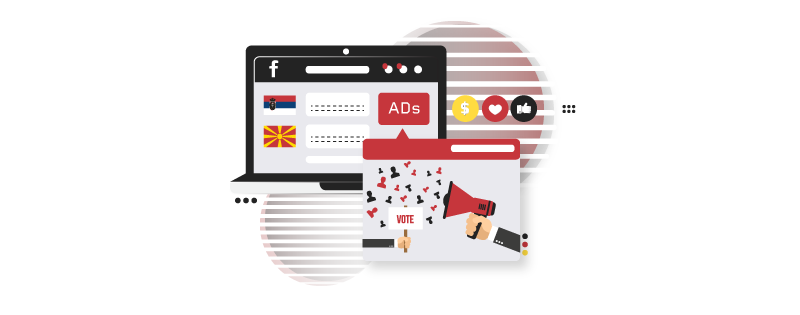
Facebook is starting to follow electoral and political advertising in the Balkans
Facebook has announced that it will expand its transparency system and confirmation of authenticity of ads about elections and politics starting from mid-March. Namely, Facebook will cover additional 32 countries, including Serbia and North Macedonia where the elections are to take place very soon.
This turn of events follows the efforts of SHARE Foundation and its international partners to point out to representatives of Facebook the problem of Western Balkans countries being excluded from those where Facebook actively monitors political advertising. This issue is very important in light of the election campaigns in Serbia and North Macedonia, having in mind possible manipulations, the lack of transparency of funding of ads and using non-political pages to advertise for political purposes.
Facebook, Inc. will in this manner expand the transparency of political advertising on their main social networking platform and Instagram in the mentioned countries. Until now, such policies were implemented mainly because of suspicion of foreign interference into election processes during the US presidential elections and Brexit referendum in 2016. The Cambridge Analytica scandal, when data of tens of millions of citizens leaked and pressure from states followed, also pressured Facebook to improve the transparency of its platform.
Facebook Ad Library will provide access information on total advertising expenses, number of ads, as well as data about specific ads – demographic target group of the ad, geographic scope of the ad, etc. In order to analyse political advertising, Facebook will enable researchers, journalists and the public access to the Ad Library API. In addition, by the end of April, it will be possible to download a report for the new 32 countries with aggregated data on ads about elections and politics.

All actors, including political parties, candidates and other organisations wishing to post ads about elections or politics on Facebook and Instagram will be required to register as advertisers, so it can be seen who paid for advertisements. It is also necessary for advertisers to confirm the identity with official documents issued by the state where they wish to publish ads, as well as additional information such as local address, telephone number, email and website if they wish to use the name of a Facebook page or organisation in the disclaimer. In case they do not register, Facebook may restrict posting ads about politics and elections during the verification process.
Related content

BIRN Serbia journalists targeted with spyware
According to the findings by Amnesty International (AI), two investigative journalists of the online portal BIRN Serbia have been targeted by the Pegasus spyware, developed by the Israeli NSO Group. Jelena Veljković and another journalist who wished to remain anonymous received suspicious Viber messages on 14 February from the same unknown Serbian phone number. One […]
28. March, 2025.

What Are the Latest Developments for a Strong Passwordless Authentication?
Corporate and personal data are being stored in distributed cloud platforms at a growing rate due to the acceleration of digital transformation across all industries and sectors, increased adoption of cloud-based technologies, and hybrid work norms. Many entities, including apps, organizations, people, devices, etc., have access to this data. Traditional security measures are no longer […]
9. June, 2023.
Instagram sabotage
Amid ongoing social unrest and a tightly controlled traditional media landscape, the internet has become essential for communication and organising. Instagram, one of the most widely used platforms in Serbia, is a key source of information for many citizens about student and civic protests and enables on-the-ground reporting, particularly when documenting violence against protesters. Shutting […]
23. January, 2026.