
News
Round two of the battle against mass biometric surveillance
The controversial Draft Law on Internal Affairs was withdrawn from the procedure on Monday, December 26. The decision to withdraw followed two sessions of the public discussion, which was initially open for three weeks and then extended at the request of civic organisations.
At the same time, the Government announced “broad consultations” in further work on the draft of this regulation, with the aim “to clarify all doubts in the public and for everyone to understand the intention of the law, which is of particular importance for the safety of all citizens of the Republic of Serbia.”
In a little more than a year, this is the second attempt to reform one of the key areas of regulation that was abandoned during the public discussion. Unlike the first one, the work on the second draft went on in parallel with a series of consultative meetings with the expert community. However, both experts and the general public contested a number of proposed provisions regulating the powers of the police and the competent minister.
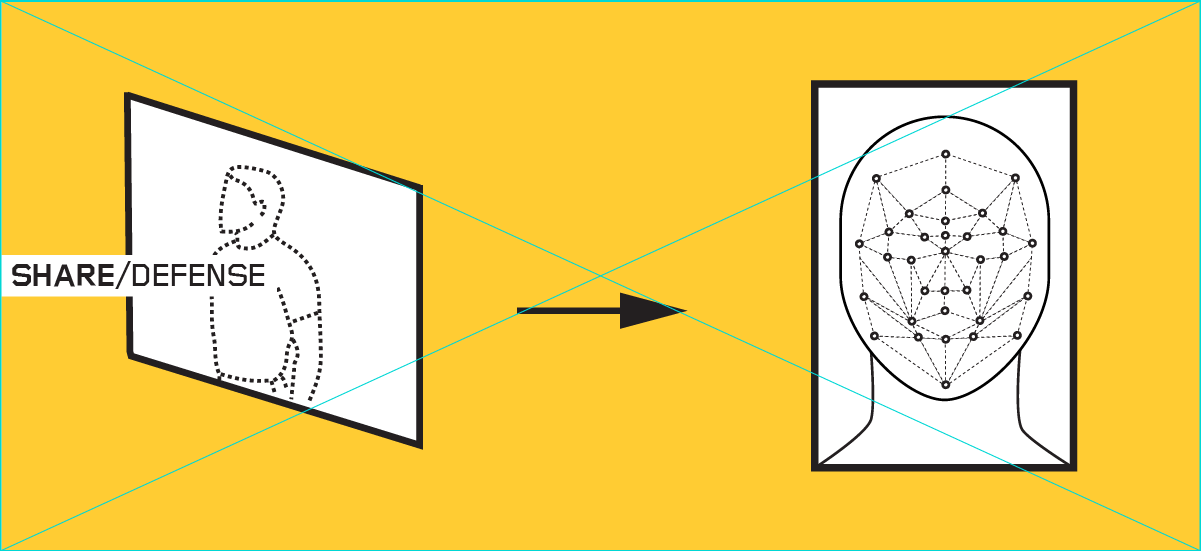
As an organisation dedicated to protecting digital rights and freedoms, SHARE Foundation focused on those articles of the Draft which deal with mass, indiscriminate processing of citizens’ biometric data through a smart video-surveillance system. We remain on the position that indiscriminate biometric surveillance of public spaces is contrary to the Constitution of Serbia and international conventions on the rights and freedoms of citizens.
SHARE Foundation advocates for the introduction of a moratorium on the use of intrusive technologies that involve mass, indiscriminate processing of the most sensitive personal data of citizens. From the first announcements of the acquisition of the smart surveillance system from the Chinese company Huawei, we have been warning the public and the authorities that such measures have no basis in the Constitution and laws of Serbia, and that its use would grossly violate the principles of necessity and proportionality, embedded in the national and international regulation of police powers.
We would like to thank the activists, collaborators and all partner organisations with whom we won this victory.
Useful links:
- SHARE Foundation position on the biometric surveillance of public spaces in Serbia (December 2022)
- Analysis of the second Draft Law on Internal Affairs (December 2022)
- Debate on the law on policing (Serbian) – what is debatable and what can be changed (December 2022)
- Comments on the first Draft Law on Internal Affairs (September 2021)
- SHARE_TV – hiljade.kamera short documentary film (July 2020)
Related content

The right to privacy in the time of coronavirus: freedom’s last line of defence?
Dr Mihajlo Popesku, Head of Research, Auspex InternationalCatalina Bodrug, Research Scientist, Auspex International Earlier this month, Auspex conducted two large-scale online surveys1 in the UK and Italy, focusing on residents’ behavioural and emotional responses to the Covid-19 pandemic and resulting lockdown, with samples of 2,001 respondents in each country – representative by age, gender, region and socioeconomic class. […]
30. April, 2020.

Open Letter: Facebook’s End-to-End Encryption Plans
4 October 2019 Dear Mr. Zuckerberg, The organizations below write today to encourage you, in no uncertain terms, to continue increasing the end-to-end security across Facebook’s messaging services. We have seen requests from the United States, United Kingdom, and Australian governments asking you to suspend these plans “until [Facebook] can guarantee the added privacy does not reduce […]
7. October, 2019.

Summer School: Challenges of regulating the digital environment
The third Digital Rights Summer School was held from 25 to 31 August in Perast, Montenegro, gathering more than 40 journalists, activists and experts in the fields of AI, media, human rights, surveillance, and digital policy. During five days of talks and workshops, numerous issues regarding the regulation of the digital environment were discussed and […]
20. October, 2024.